9 Beet Companion Plants That Don’t Compete for Space

It seems like many gardeners growing beets struggle with crowded beds and stunted roots. The secret lies in treating your crop exactly how you prefer to be treated. You must choose neighbors who respect boundaries and stay out of the way.
Beet the Crowds, Root for Friends
Your successful relationship with beet root crops depends on a strict “no-hugging” policy in the (vegetable) bed. If you’re trying to get more food out of a single bed, we also put together a guide on vegetables that work especially well in high-yield garden beds for feeding a family.
1: Lettuce (USDA Zones 2-10)

Lettuce behaves like the perfect floor mat for your garden. As a true leafy friend, it keeps its shallow roots right near the soil surface while your beets claim the deep darkness below.
It serves as a living mulch, shading the soil and slowing down moisture loss. You can pack these greens tightly because they never plan on staying long enough to cause a scene anyway. I’ve found this pairing especially helpful in spring, when keeping the soil cool and evenly moist really matters.
Quick tip: I like to sow lettuce in thin rows or small clusters between beet rows, spacing plants about 6 to 8 inches apart. By the time the beets need more room, the lettuce is usually ready to harvest.
Lettuce is surprisingly flexible, and we wrote an article about companion plants that help lettuce thrive all season long if you want more pairing ideas.
2: Onions and Scallions (USDA Zones 3-9)

Onions and scallions have a naturally slim growth habit that makes them easy neighbors for beets. Both vertical enthusiasts grow mostly upwards rather than outwards, leaving the underground territory entirely to your expanding beets.
Their pungent aroma is a kind of confusing perfume that also helps discourage aphids and other small pests, making the bed a little less inviting to troublemakers. Tucking a few scallions between rows creates a fragrant barrier that keeps your patch peaceful.
Quick tip: I like to plant scallions or onion sets about 4 to 6 inches apart in the gaps between beet rows, keeping them closer to the edges so the beet roots have plenty of room to expand.
Timing really matters with onions, and we explain when to plant onions based on your zone or state in another guide.
3: Garlic (USDA Zones 3-8)

Garlic stays in its own lane with a compact root system and a very pointy upright attitude. It won’t even dream of crowding your beets because it prefers a solitary existence. I like it because it’s easy to tuck in and doesn’t demand constant attention once planted.
While garlic isn’t a cure-all, it’s often associated with healthier soil conditions and can help reduce disease pressure in crowded beds. At the very least, it’s a low-drama neighbor that coexists well with root crops.
Quick tip: Plant garlic cloves about 4 to 6 inches apart along the edges or between beet rows in fall or early spring, making sure the cloves are set deep enough so they don’t interfere with beet root development.
Garlic plays well with more than just beets, and we put together a guide on companion plants for garlic if you’re growing it elsewhere in your garden too.
4: Radishes (USDA Zones 2-10)
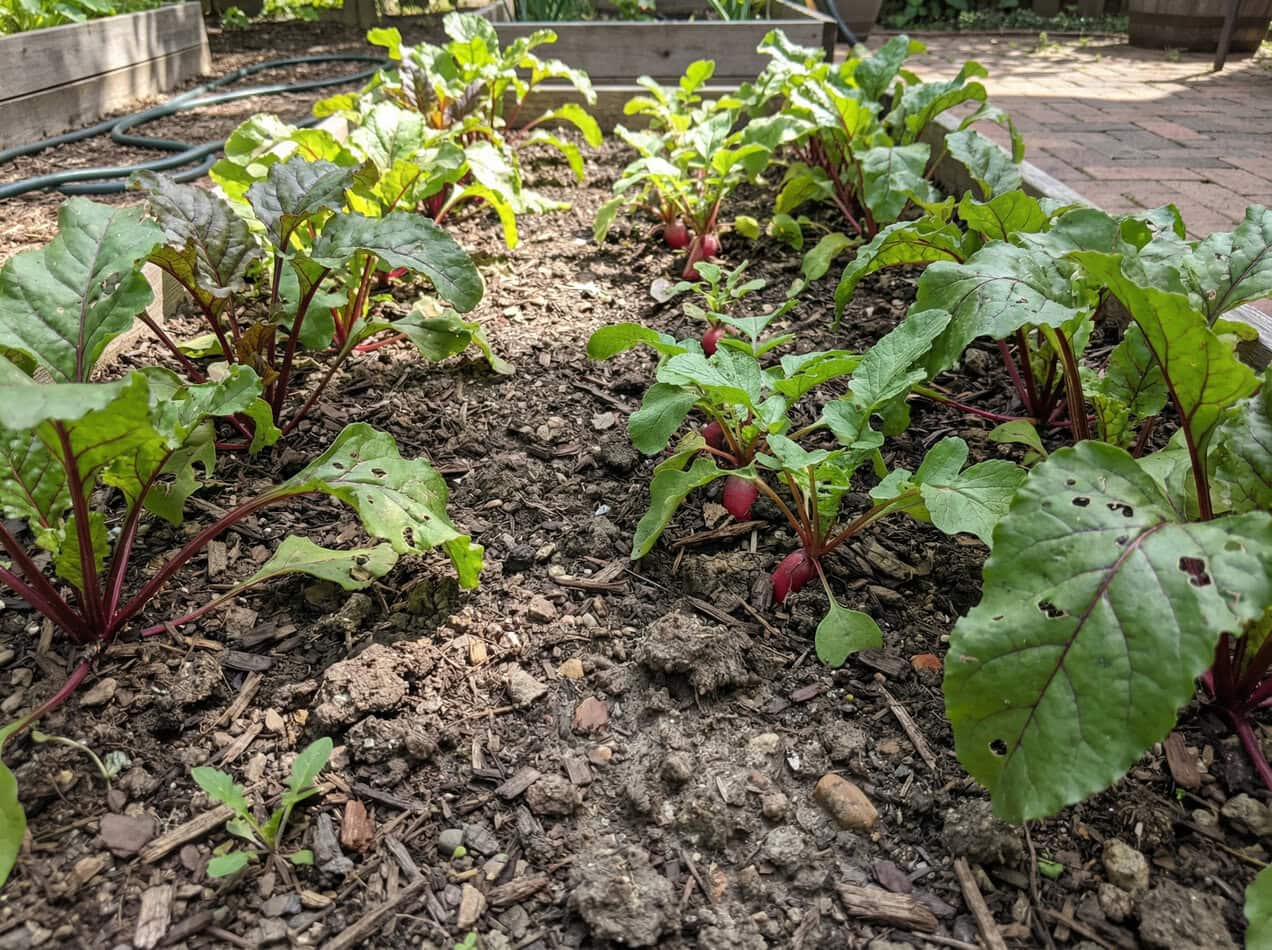
Radishes are the classic hit-and-run growers, that mature and exit the soil before your beets even finish their morning coffee. I often use them as a quick filler crop considering they’re ready to harvest in just a few weeks, freeing up space right when beets start needing it.
As they grow and are pulled, radishes help loosen the soil, which makes it easier for slower, heavier beet roots to expand. You get an early crunchy snack while simultaneously prepping the bed for a bigger harvest.
Quick tip: I like to sow radish seeds directly between beet seeds or rows, spacing them about 2 inches apart. Harvest them promptly so they’re gone before the beets begin to swell.
When space is limited, I’ve also had good results planting beets more efficiently, and we walk through multi-sowing beetroot step by step in a separate guide.
5: Bush Beans (USDA Zones 3-10)

Bush beans give your garden a quiet upgrade by improving soil fertility without taking over. Unlike their pole beans cousins, these stay compact and don’t sprawl or climb, respecting the privacy of nearby roots.
As legumes, bush beans work with soil bacteria to add nitrogen back into the soil over time. Their shallow roots sit comfortably above beet roots, so both crops can grow without competing for space or nutrients.
Quick tip: Plant bush beans about 6 to 8 inches apart, either in short rows beside your beets or at the ends of the bed. Avoid planting them too close together so airflow stays good and roots don’t tangle.
6: Spinach (USDA Zones 2-9)
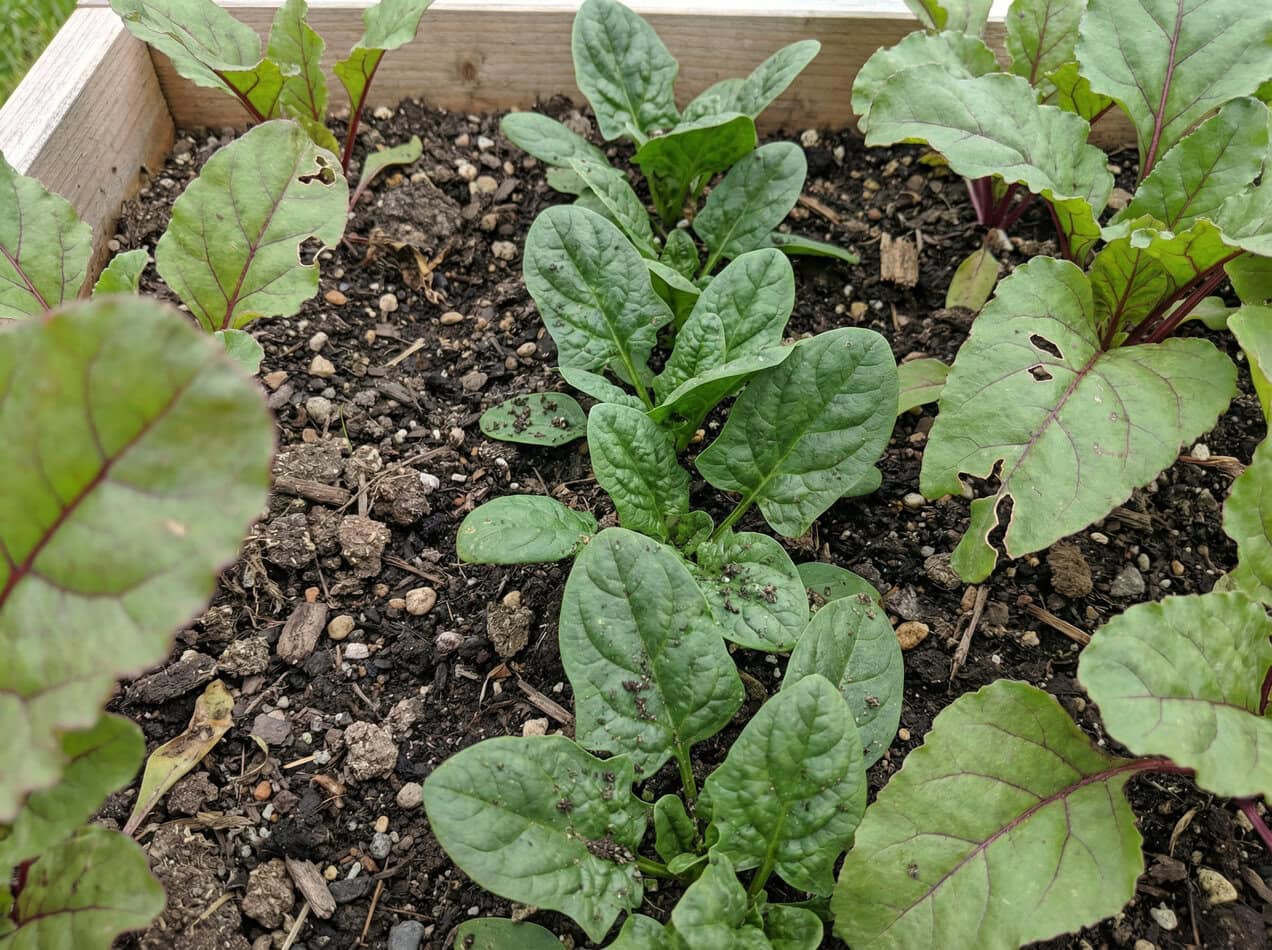
It’s hard to find a better plant that beets the competition so effortlessly like spinach. It thrives in the same cool weather that makes beets happy, which is why I often plant them together early in the season.
As quite a low-profile plant, it fills in empty spaces with a tiny footprint and zero ego. Its shallow roots stay close to the surface, so they don’t interfere with beet roots growing deeper in the soil.
Quick tip: I like to sow spinach in narrow bands or small patches between beet rows, spacing plants about 4 to 6 inches apart. Harvest outer leaves regularly to keep spinach compact while giving beets room to expand.
7: Chives (USDA Zones 3-9)
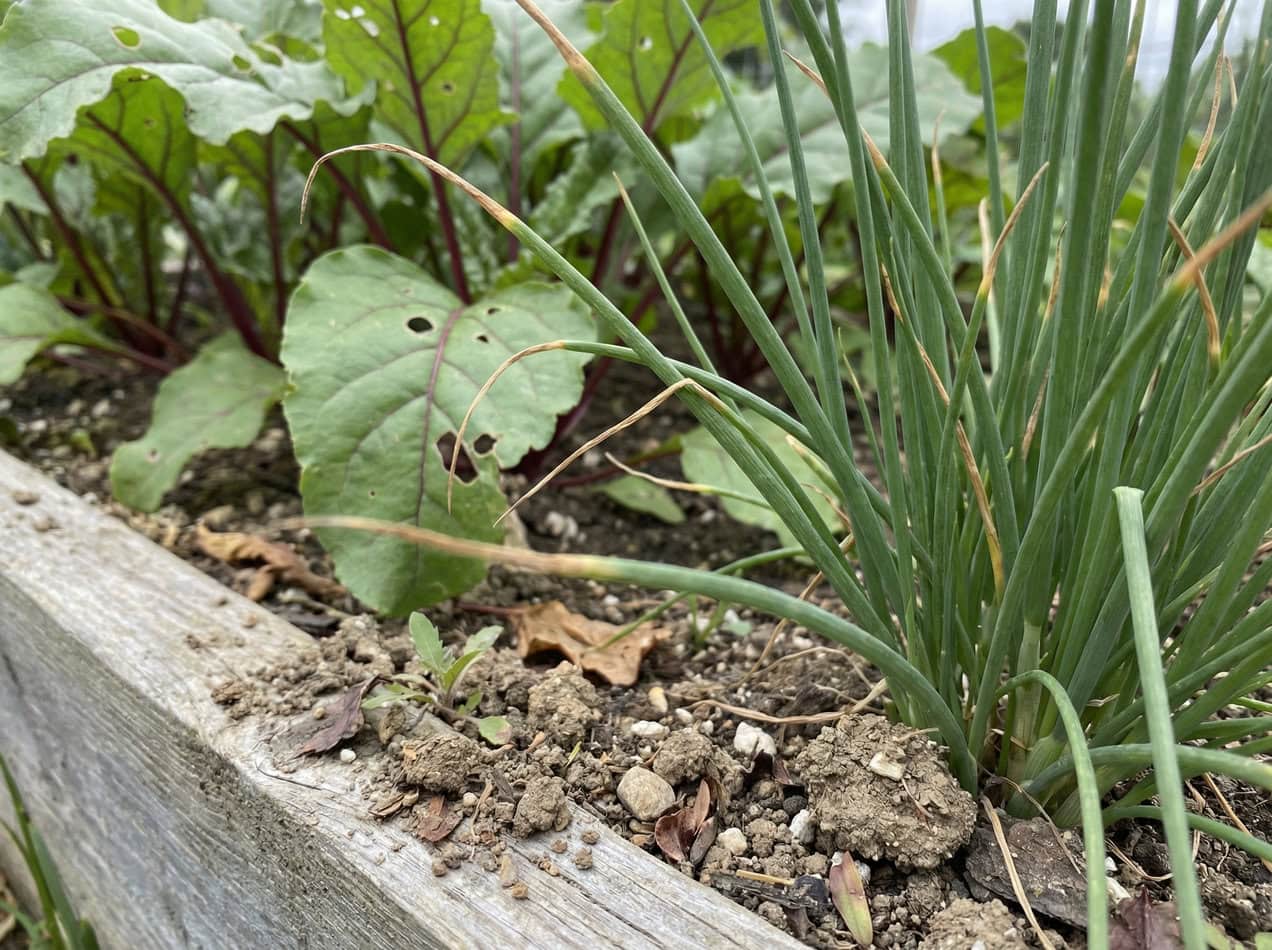
Chives look like grassy needles that take up very little space, which makes them easy to fit into almost any bed. I like to plant them along the edges to create a tidy border.
Their mild onion scent may help discourage some insect pests, and at the very least, chives don’t attract problems of their own. So your yard will stay un-beet-able this season!
Quick tip: Plant chives in small clumps about 8 to 12 inches apart along the borders of your beet patch, trimming them back occasionally to keep airflow open and growth compact.
8: Sweet Alyssum (USDA Zones 2-11)
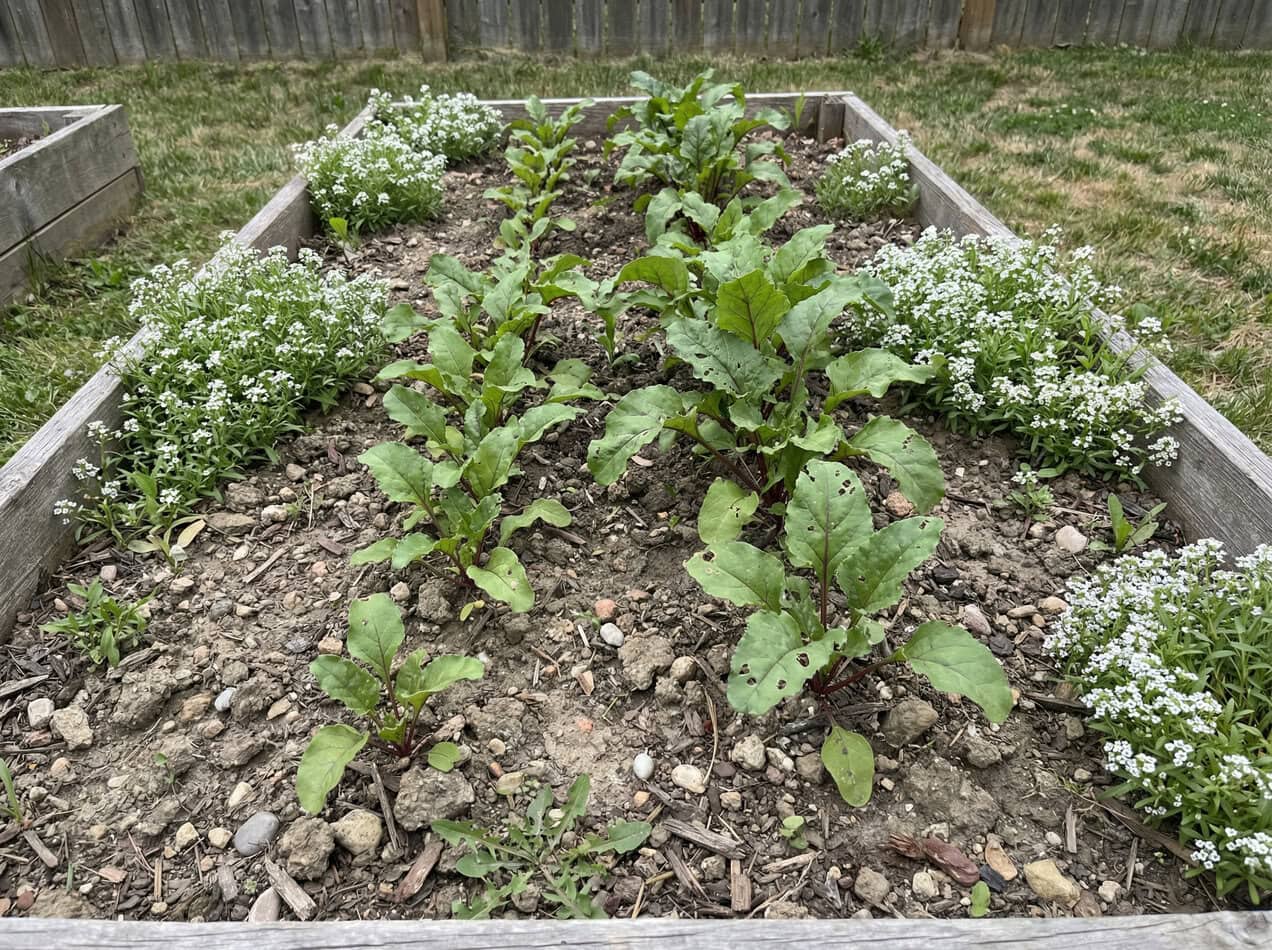
You can’t eat it, but it still has great roommate pollen-tial. Alyssum creates a flowery carpet that stays right at the soil surface, never crowding the space below where beet roots are growing. I like using it to fill empty edges or gaps that would otherwise stay bare.
Sweet alyssum is especially useful for attracting beneficial insects like hoverflies, which help keep pest populations while looking incredibly chic. Your beets get to grow in peace while the flowers handle the public relations and insect control.
Quick tip: Sow alyssum seeds along the borders or in open patches between beet rows, leaving at least a few inches of space around each plant so air can circulate freely.
Attracting beneficial insects can make a big difference, especially if pests are already a problem. We explain what to do when cucumber beetles start wreaking havoc in another article.
9: Dill (USDA Zones 3-10)
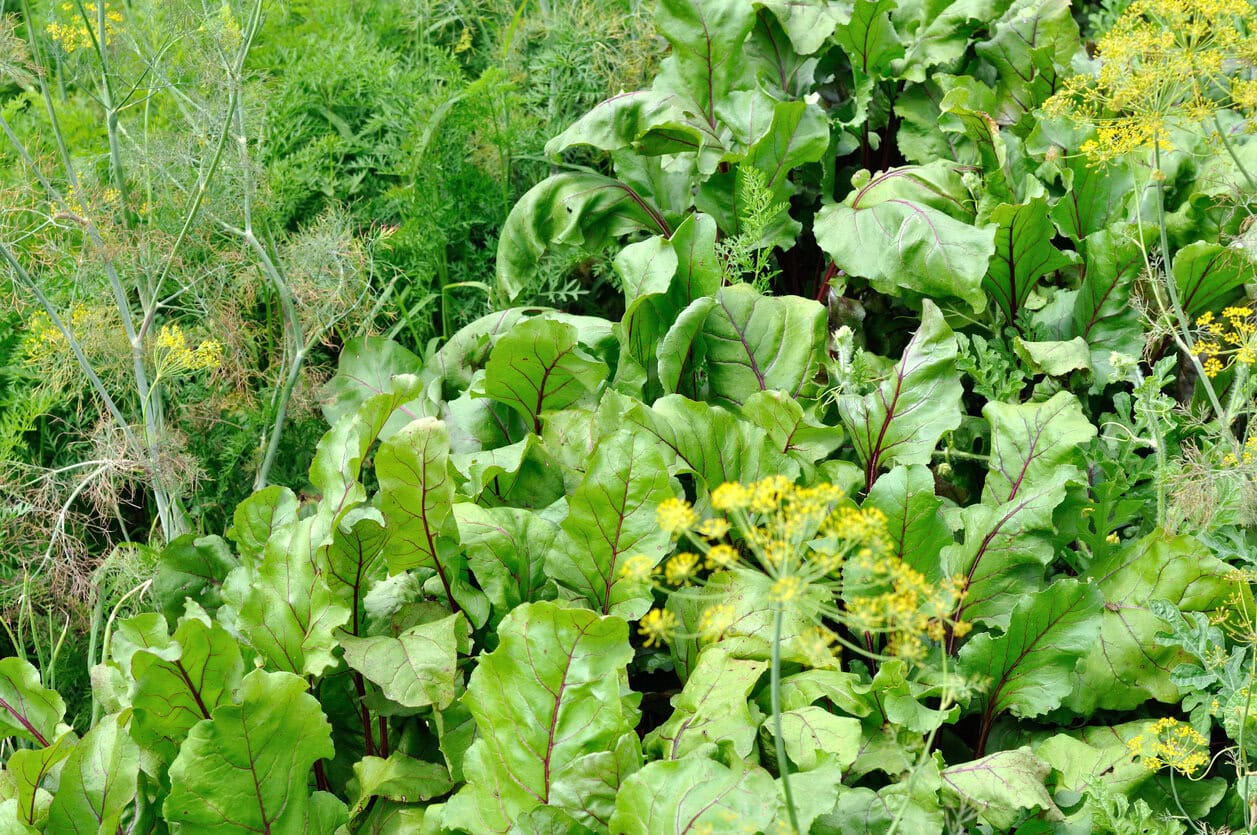
Dill reaches for the clouds with a lanky frame that casts no shadow on its neighbors. This (quite tasty and sweet) aromatic plant shoots straight up without missing a beet, allowing every drop of sunlight to reach the foliage on the garden floor.
As an aromatic herb, it also attracts beneficial insects, including predatory wasps, which help keep caterpillars and other pests under control. It adds function without competing for root space.
Quick tip: Plant dill about 8 to 12 inches away from beet rows, giving it room to grow tall while keeping beet roots undisturbed. Avoid overcrowding, as dill benefits from good airflow.
Beets also pair well with many beginner-friendly crops, and we explain which vegetables are the easiest to grow in a garden bed if you’re just getting started.
The Root-top Lounge
I like to think of beet beds in layers. Here’s how I usually organize them:
- Beets first: Start your season by sowing beet seeds in clear, well-spaced rows so they can establish strong roots without competition.
- Lettuce and spinach: Once beets are up, tuck shallow-rooted greens into the surface gaps. They keep the soil cool and productive without crowding the roots below.
- Onions, scallions, garlic, and dill: Thread these upright, vertical growers between beet rows to take advantage of air space without stealing nutrients or underground room.
- Garlic: Place garlic along the edges or between rows to add structure above ground while keeping root competition low.
- Bush beans: Plant bush beans nearby or at the ends of beds to improve soil fertility without sprawling or climbing into neighboring plants.
- Chives: Line the edges of the bed with chives to create a tidy border that takes up very little space and stays out of the way.
- Sweet alyssum: Fill open patches or borders with alyssum to attract beneficial insects while keeping roots shallow.
- Dill: Add dill slightly off to the side or between rows so it can grow tall without shading smaller plants.
- Radishes: Sow radishes in any leftover gaps. They grow quickly, loosen the soil, and are harvested before beets begin to swell.
The goal here is to utilize every inch of soil depth and height simultaneously, create a productive and organized ecosystem, and thus avoid deep-seated issues and encourage surface-level friendships.
Once your beet harvest comes in, we explain in this article how to store fresh, firm beets for winter so they last as long as possible.
Why Beets Are the Perfect Roommates

Beets tend to develop moderately deep roots, which leaves the soil surface open for shallow growers and the surrounding space available for other crops.
In my own beds, I’ve found they grow best when nearby plants don’t compete too aggressively for nutrients or elbow their way into the same soil zone. So allowing a greedy neighbor to steal their nutrients inevitably leads to a bitter beet-rayal.
They do appreciate potassium-rich soil and steady feeding, but even well-fed beets struggle to size up when they’re physically crowded. You’d need to provide wide lanes to satisfy their need for a private bubble and expansion.
Strategic spacing serves a dual purpose beyond just growth by boosting airflow. Clear paths also ensure that your garden remains healthy and up-beet, so larvae cannot migrate between plants.
If you enjoy mixing crops like this, we also explain which vegetables grow best together in one garden bed in a separate article.

Hey there! I’m Dragana, an ecologist with a serious soft spot for soil and the magic that sprouts from it. My Adriatic garden is a bit of a wild bunch: aromatic herbs and roses doing their fragrant thing, juicy fruits and stubborn olive trees with a Mediterranean attitude. I’m here to unearth gardening wonders; are you ready to dig in with me?