7 Essential Hydrangea Care Tasks To Tackle In February
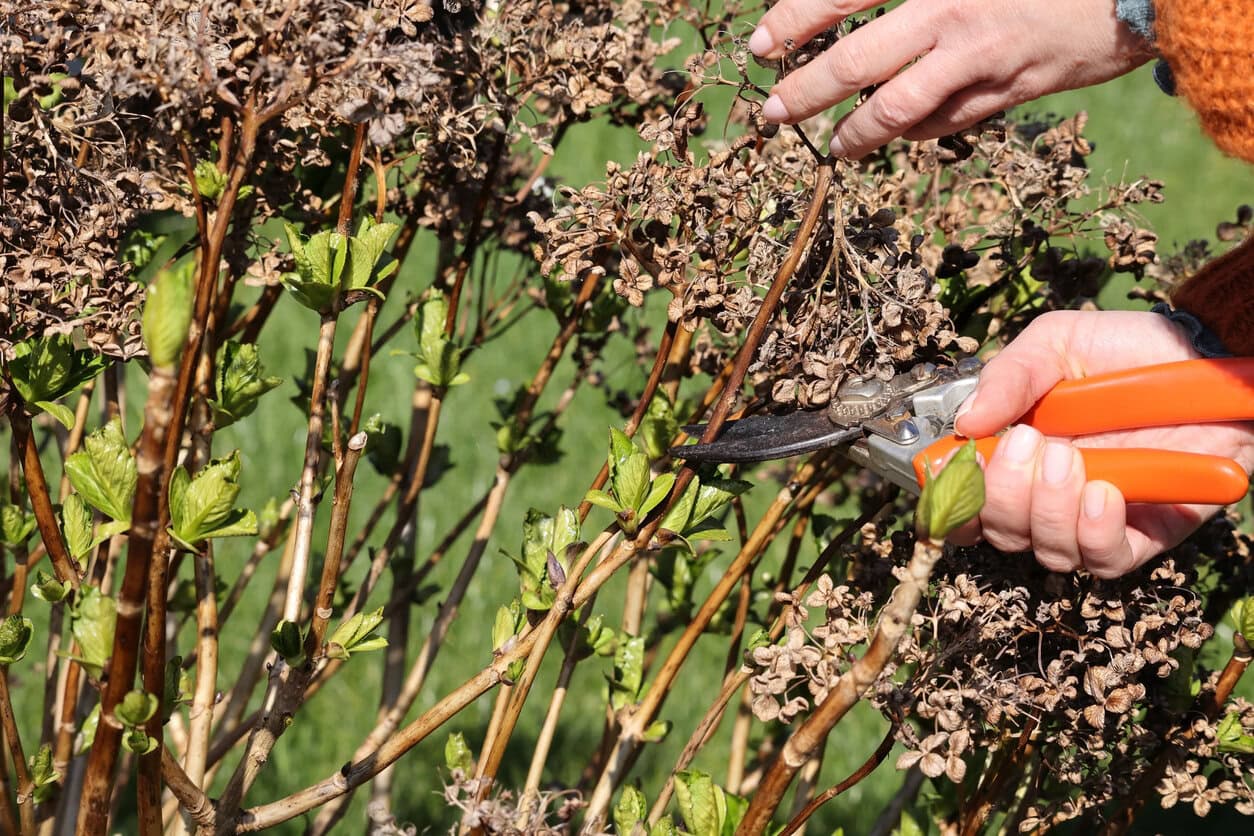
The groundhog sneaked a peek, saw his shadow (or didn’t), yet your hydrangeas are still communing with the underworld. But hey, lazy gardeners aren’t born. They’re made in February.
So, why not knock out these seven tasks now? Do not retreat. Front-load the effort so you can spend July supervising from a lawn chair with a cold drink.
These February tasks lay the groundwork for better blooms later and our guide with simple tips for bigger, brighter hydrangea flowers builds on that foundation.
Seven Habits of Highly Effective Hydrangeas

These seven tasks aren’t particularly glamorous, and you won’t see the results immediately, but they’re the difference between a summer of wow and a summer of “why didn’t I do that back in February?“.
1: Get Rid of the Winter-damaged Stems
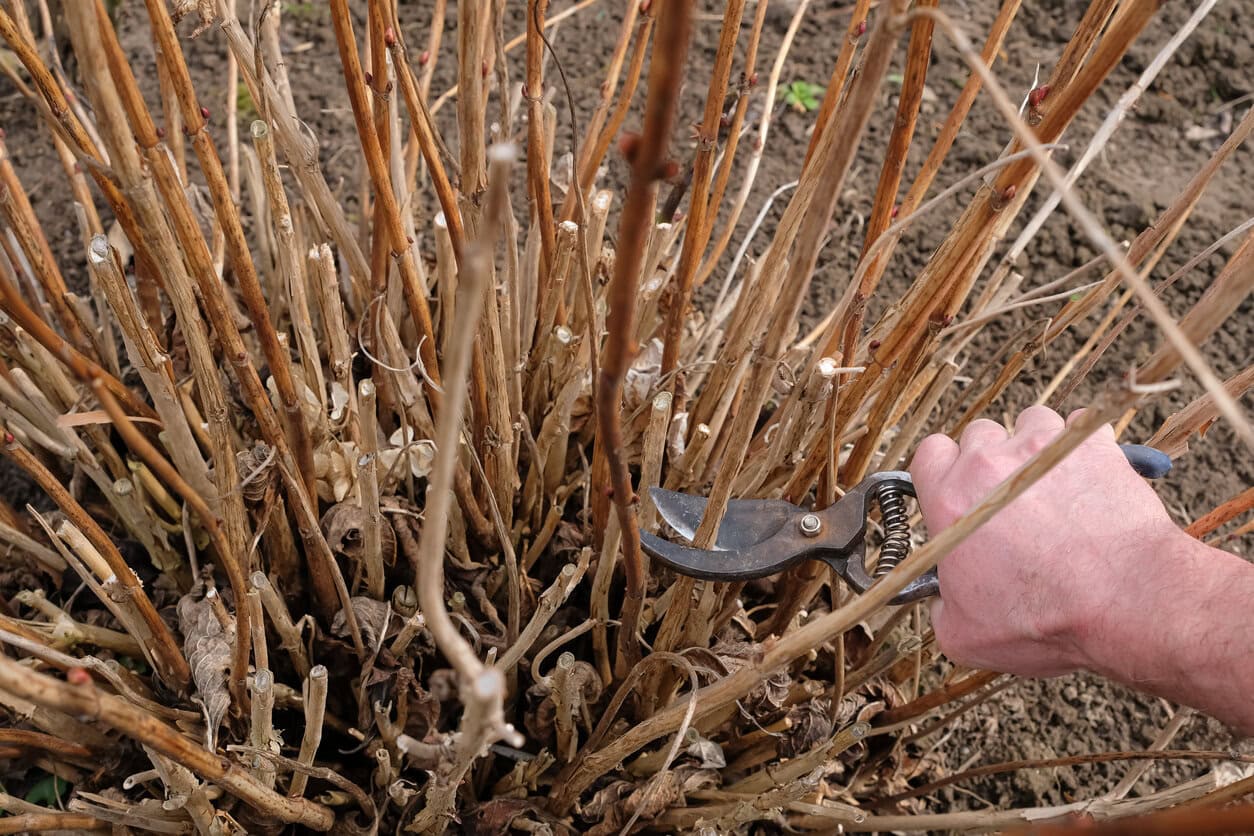
Winter snow is a giant foot stepping on your shrubs. By now, it has probably snapped or splintered some branches, or they’ve turned an unofficial Pantone shade of Rot Black.
Month-old banana vibes? Hanging by a thread? Yes, that’s clearly dead wood. No miracle comebacks happening here. Snip it and stop worrying about the what-ifs.
If you’re unsure whether a stem is truly dead, the scratch test explained below makes it easy to tell.
Many spring problems start with small mistakes made too early, our guide on common hydrangea care mistakes explains what to avoid as the season changes.
2: Clear Out the Base Clutter

Winter winds trap wet leaves and trash against the crown of your plant. Sure, it looks messy, but the real issue is airflow. Stop the rot before it finds a rhythm.
Gently rake the soggy leaf-mat away and make the base of your hydrangea a very inhospitable place. Trust me, fungus doesn’t need much of an invitation to make itself at home.
3: Playing Eye Spy with Buds
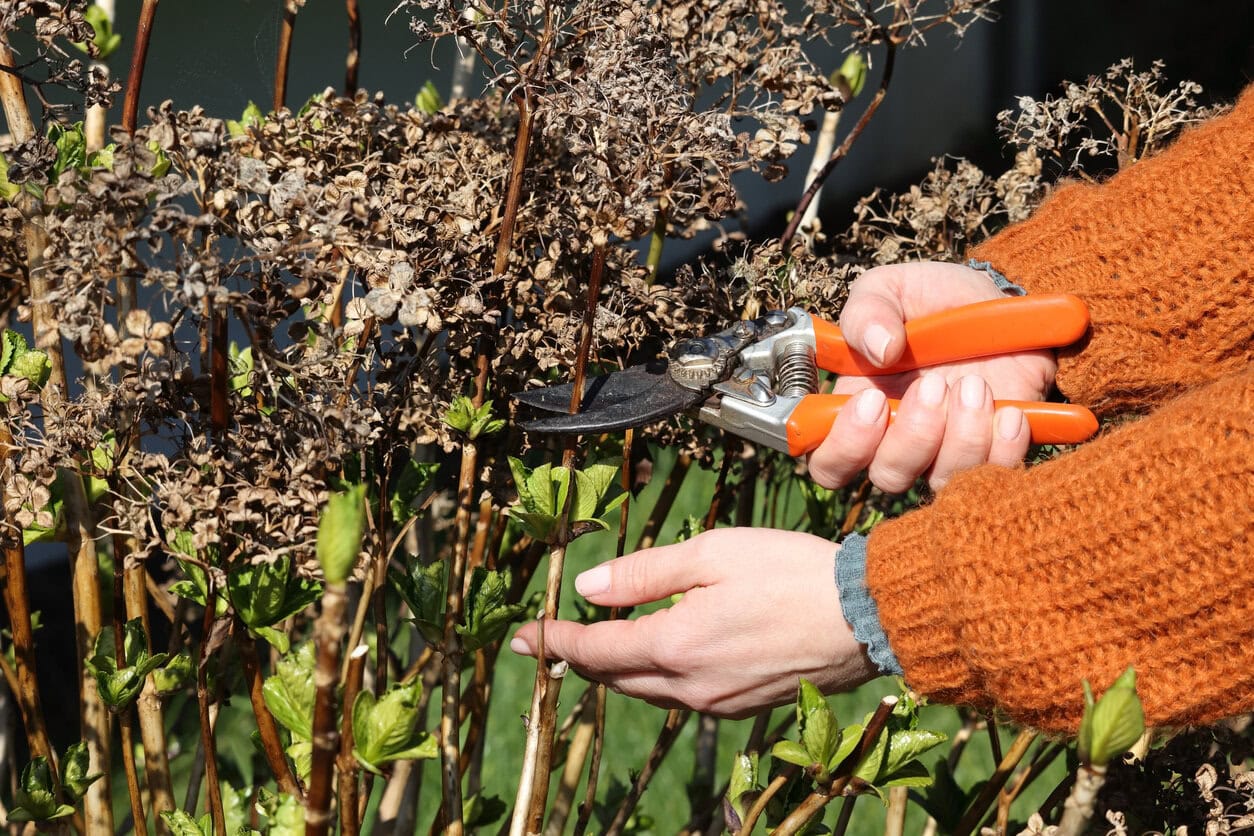
Take a minute to actually look at the stems. You’re hunting for small, green, or reddish bumps. The buds. Better spot them now than swing your shears around like a blindfolded kid at a piñata party.
If you cut above a swelling bud (AKA eye), you’re a hero. If you cut below it, you’ll regret it in June. It’s a budding relationship, so don’t get clipping happy.
Quick reminder: This matters most with panicle and smooth hydrangeas, which bloom on new wood. With bigleaf and oakleaf hydrangeas, spotting buds now is simply a reminder of what not to cut.
4: A Light Refreshment of Mulch

The February freeze-thaw dance tries to heave your plant’s roots out like a loose tooth. Time to kill the beat.
Toss a thin (one-inch) layer of fresh mulch around the root zone but away from the actual woody stems. If you pile mulch against the bark, you’re just building a cozy moist apartment for rot and voles.
5: Fix the Soggy Foot Syndrome
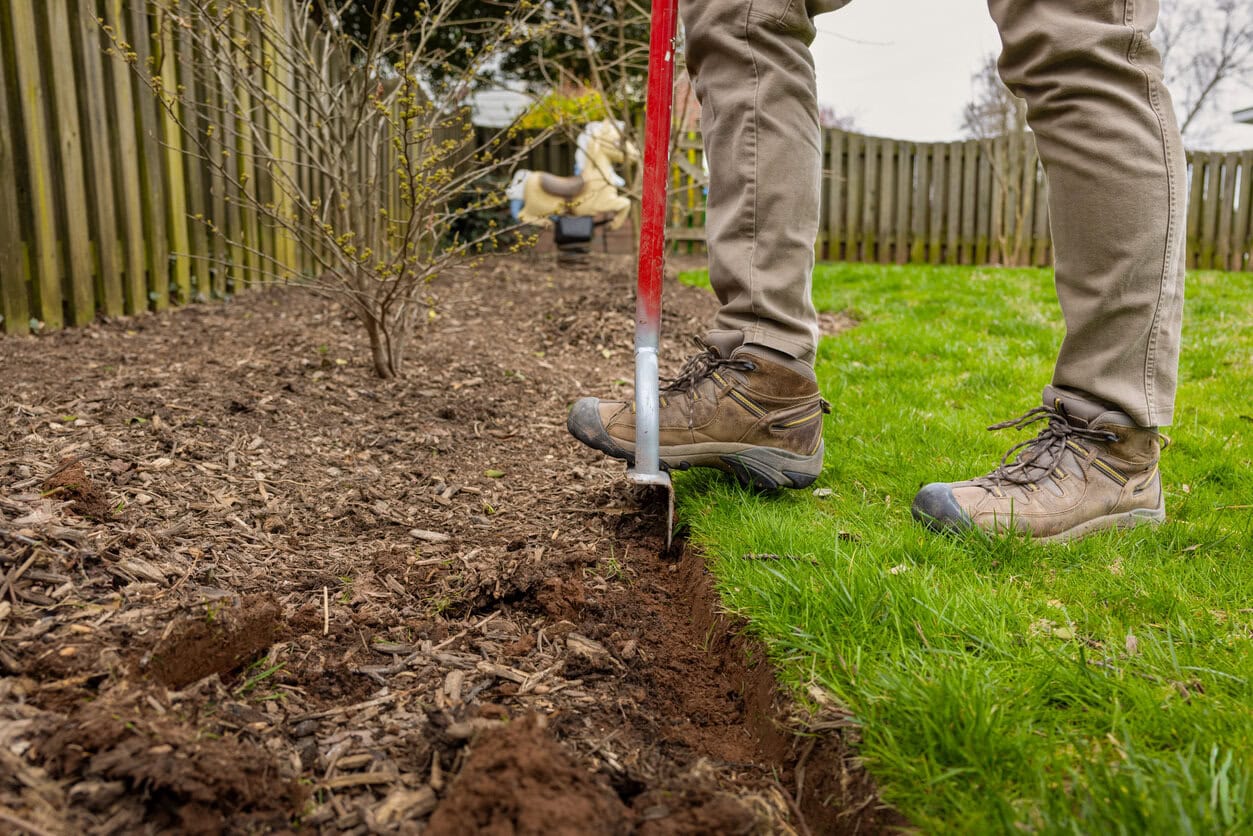
If February’s snowmelt has turned your garden into a swamp, you’ve got drainage issues like my uncle. Standing in cold, anaerobic mud is the fastest way to kill the roots before spring even arrives.
Where does the water pool? You might need to gently divert it with a shallow trench or, if you feel particularly ambitious, mix in some organic matter once the ground isn’t a brick.
Quick reminder: Poor drainage is a problem for all hydrangea types, regardless of how or when they bloom.
6: Solving the Wood Pruning Mystery

Identify your variety now to avoid horror later!
- Old-wood bloomers (like Bigleaf and Oakleaf) set buds last year, so if you prune them now, you’ll have zero flowers.
- New-wood bloomers (like Panicle and Smooth) are more forgiving and flower on fresh spring growth.
When in doubt, let it sprout. Better to have a messy shrub than a flowerless one.
If your hydrangeas still don’t flower later in the season, take a look at our guide explaining why hydrangeas aren’t flowering and what usually causes it.
7: The Soil Moisture Audit
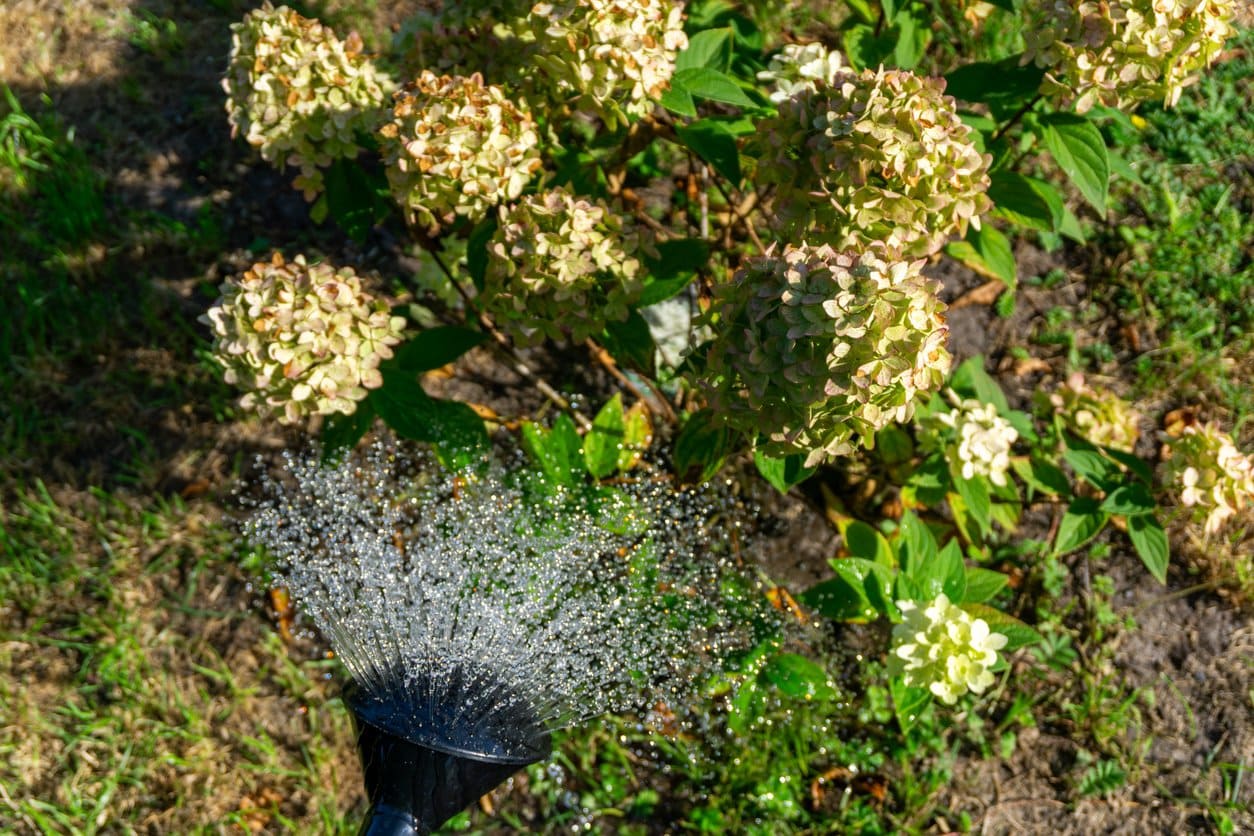
It sounds like a prank, but hydrangeas can truly die of thirst in the middle of winter. It’s the ghost drought. If the dirt feels like a dried-out cork a few inches down, grab the hose. Give them a quick drink, nothing crazy.
And only water on days when temperatures are well above freezing. No need for a deep soak, just enough to keep the dormant roots from shriveling up before the spring alarm clock goes off.
Once February tasks are done, take a look at our March hydrangea care guide to see what comes next as spring growth begins.
What is the Scratch Test Anyway?

February is the month of garden gaslighting. You’ll look at a stem and think, “Is that dead wood, or do hydrangeas deserve an Oscar?” It’s a headscratcher! Which is why you use your thumbnail (or a small knife if you’ve had a mani lately) to scrape the bark of a questionable branch lightly.
- If you see a bright, juicy green layer underneath? Awesome, it’s alive. Leave it alone.
- If it’s brown, brittle, and snaps like a dry cracker? Snip it like you mean it.
Why Bother with “Dead” Wood?

The logic here is pretty simple. Since the sap flow is minimal in winter, cutting now won’t result in a bleeding horror like it would in the spring. Plus, let’s be real. It’s hard for a shrub to hide its (structural) flaws when it’s this bare.
Timing makes a big difference with hydrangeas, so take a look at our guide that explains the best time to prune based on your growing zone.
Reach-For Gear
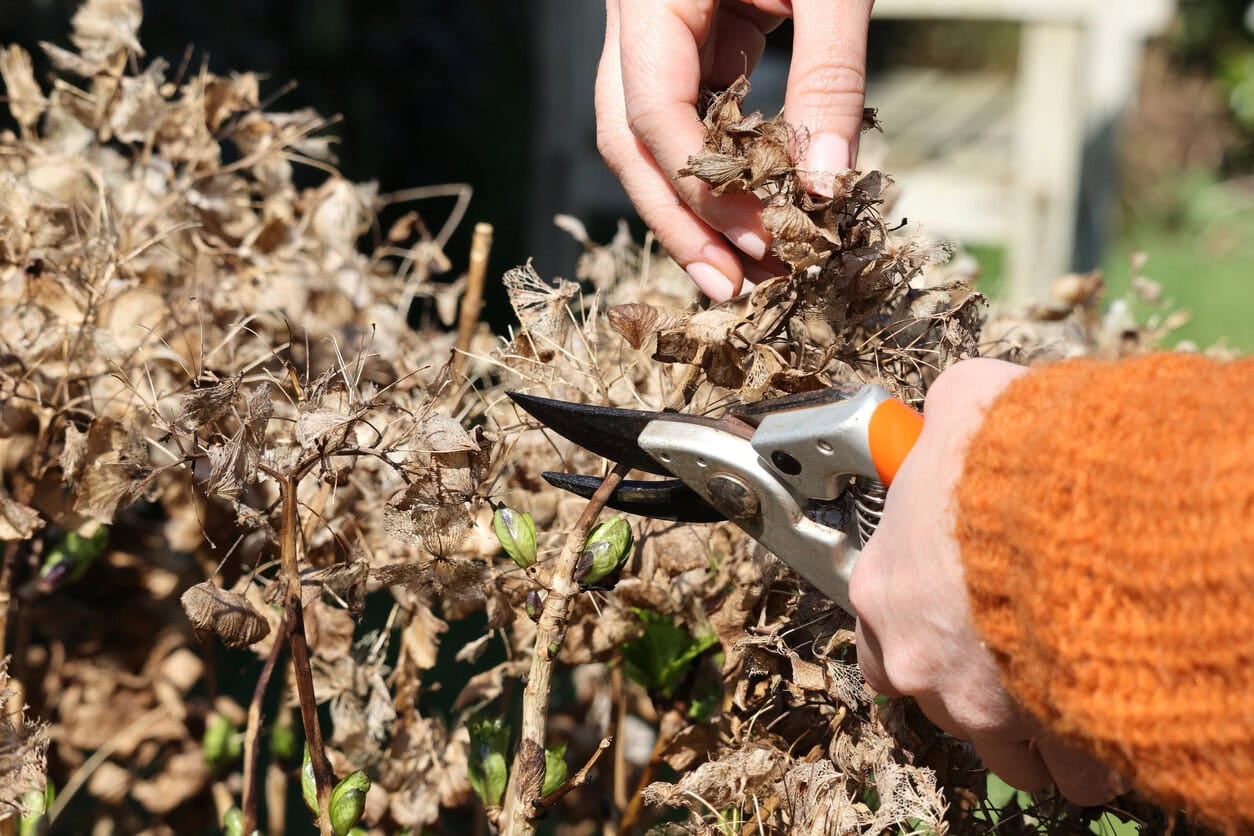
Stop. Put down the rusty kitchen shears you found in the junk drawer. You need bypass pruners where the blades cross like scissors instead of anvil pruners that crush the life out of stems.
Also, grab a bottle of rubbing alcohol. A quick wipe of the blades between plants stops you from playing hot potato… with fungi… across your yard.
Oh, and keep your thumbnail ready. It’s the most high-tech diagnostic tool you already own. It’s perfect for quick scratch tests when checking questionable stems! Finally, grab a trowel to poke the mud.
Last Bud Not Least
If you’ve followed this guide, your plants are currently vibing, and your July-you is currently raising a glass in your honor. The hydrangeas can take it from here. They’ve got buds to grow and a reputation to maintain.

Hey there! I’m Dragana, an ecologist with a serious soft spot for soil and the magic that sprouts from it. My Adriatic garden is a bit of a wild bunch: aromatic herbs and roses doing their fragrant thing, juicy fruits and stubborn olive trees with a Mediterranean attitude. I’m here to unearth gardening wonders; are you ready to dig in with me?