9 Companion Plants That Help Lettuce Thrive All Season Long

In my humble opinion, there’s no better garden “hack” than thoughtful companion planting.
It’s something that genuinely worked for me and made a bigger, more consistent difference in my garden than anything else I tried over the years.
If you’re unsure which plants pair well with lettuce, this article walks through some of the best options. But before getting into the list, let’s first look at why companion planting works so well for lettuce.
Why Companion Planting Works For Lettuce?
Lettuce is a fairly hardy vegetable that can handle cooler temperatures and light stress. That said, it’s also quite vulnerable to pests and fungal issues, especially when growing conditions aren’t ideal.
Companion planting works well for lettuce because certain plants can help in different ways:
- Some naturally repel common garden pests;
- Others provide light shade during warmer periods;
- And some improve soil conditions around lettuce’s shallow roots.
By using companion plants thoughtfully, you can rely less on chemical pesticides and fertilizers while growing healthier, more productive lettuce.
9 Companion Plants For Healthier Lettuce

1: Carrots

Because carrots grow deep in the soil, they don’t compete much with lettuce’s shallow root system for nutrients and water. I like planting carrots alongside lettuce for this reason, both crops can grow comfortably without getting in each other’s way.
As carrots develop, they naturally loosen the soil, which improves airflow and drainage around lettuce roots. In my experience, this creates better growing conditions and helps lettuce stay healthier throughout the season.
Quick tip: I like to sow carrots and lettuce at the same time so they establish together and make the most of shared space.
2: Radishes

Radishes are incredibly fast growers, which is one of the reasons I like pairing them with lettuce. As they grow, they help break up the soil, which can improve conditions for lettuce roots nearby.
Radishes can also act as a decoy for pests like flea beetles, which often target young lettuce leaves. I’ve noticed that when radishes are planted close by, pest damage on lettuce tends to be less noticeable early in the season.
3: Chives

Chives have a strong, pungent scent that can help deter common pests like aphids and slugs. I like planting them around lettuce beds because they take up very little space and add an extra layer of protection without crowding the plants.
While they won’t stop every pest, I’ve noticed chives make lettuce less appealing to insects when used as part of a companion planting setup.
4: Marigolds
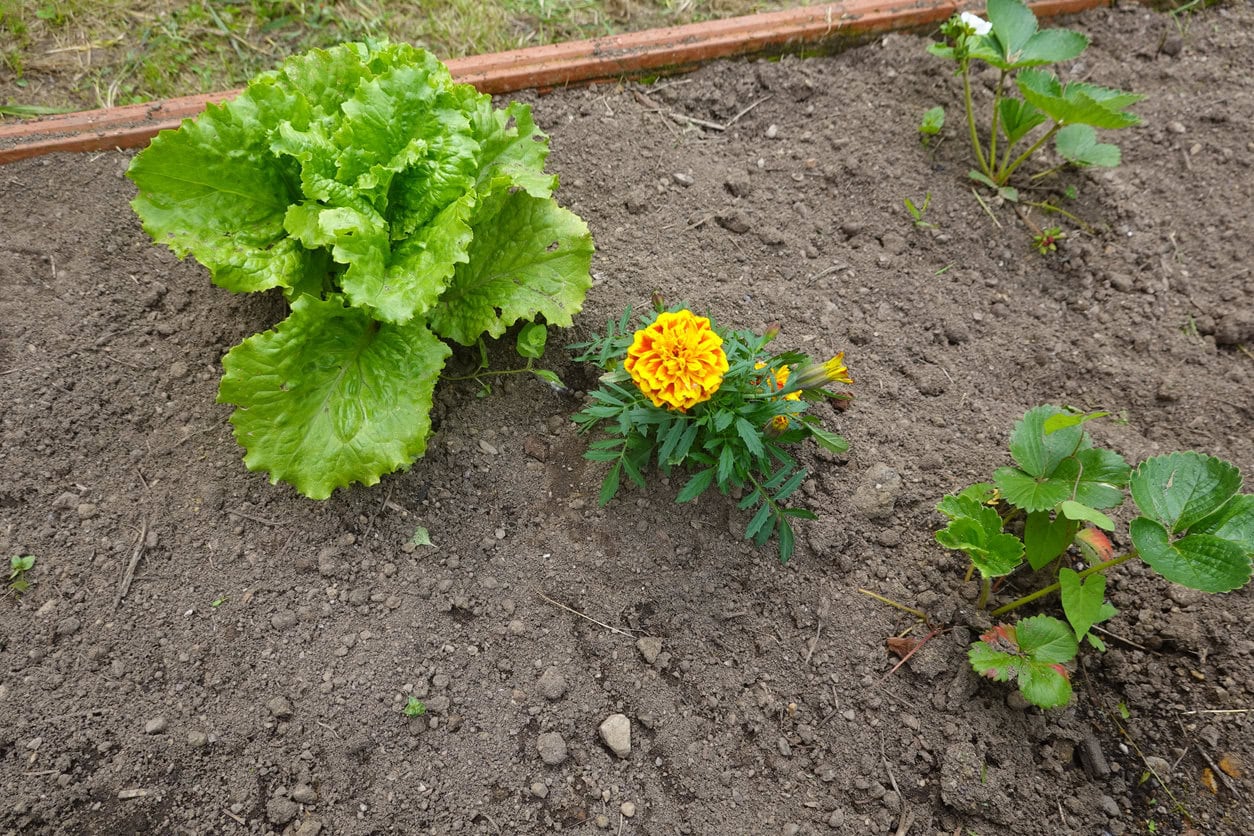
Marigolds are one of my favorite companion plants, and I mention them often for a reason. I like planting them near lettuce because they help reduce aphid pressure and can suppress soil pests like nematodes over time.
On top of that, they add a pop of color to lettuce beds, which I always appreciate. In my experience, lettuce grown near marigolds tends to look stronger and less stressed throughout the season.
Quick tip: For the best effect, plant marigolds directly in the lettuce bed rather than keeping them in separate containers.
5: Nasturtiums

Nasturtiums work well as a trap crop for lettuce by attracting aphids away from the plants you actually want to protect. I like planting them nearby because pests tend to settle on the nasturtiums first, giving lettuce a better chance to grow undisturbed.
Their trailing, spreading growth also helps cover the soil, which reduces weed pressure and keeps the ground from drying out too quickly!
6: Beets

I’ll be honest… beets aren’t my favorite to eat, but I’ve grown them many times in my mom’s garden, and they’ve always paired well with lettuce. Beets grow below the surface without casting much shade, which makes them easy companions for leafy greens.
As they develop, beet roots help loosen the soil and improve its structure over time. In my experience, this creates a healthier growing environment for lettuce without the two plants competing for space.
7: Onions

One thing I like about planting onions near lettuce is their strong, pungent scent. This smell can make nearby plants less attractive to common pests, which helps protect lettuce without any extra effort.
Onions are also compact and easy to tuck between lettuce rows, making good use of space in the garden. I’ve found this pairing especially useful in smaller beds where every inch counts.
Quick tip: Green onions or scallions work particularly well with lettuce because they stay small and are easy to harvest.
8: Calendula

Calendula is a great companion plant for lettuce because it attracts beneficial insects like ladybugs and lacewings that feed on pests commonly found on leafy greens. I like having calendula nearby because it helps keep aphid numbers in check naturally. Plus, it brightens up lettuce beds, which is always a nice bonus.
Quick tip: Plant calendula along the edges of lettuce beds so it can attract beneficial insects without competing for space.
9: Dill

Dill is another helpful companion plant for lettuce because it attracts beneficial predators like ladybugs that feed on aphids. I like planting dill nearby to support natural pest control without relying on sprays.
That said, dill can grow fairly tall, so it’s best to give it a little space. I’ve found planting it just outside the main lettuce bed works well and prevents the plants from competing for sunlight.
Bonus: Sweet Alyssum
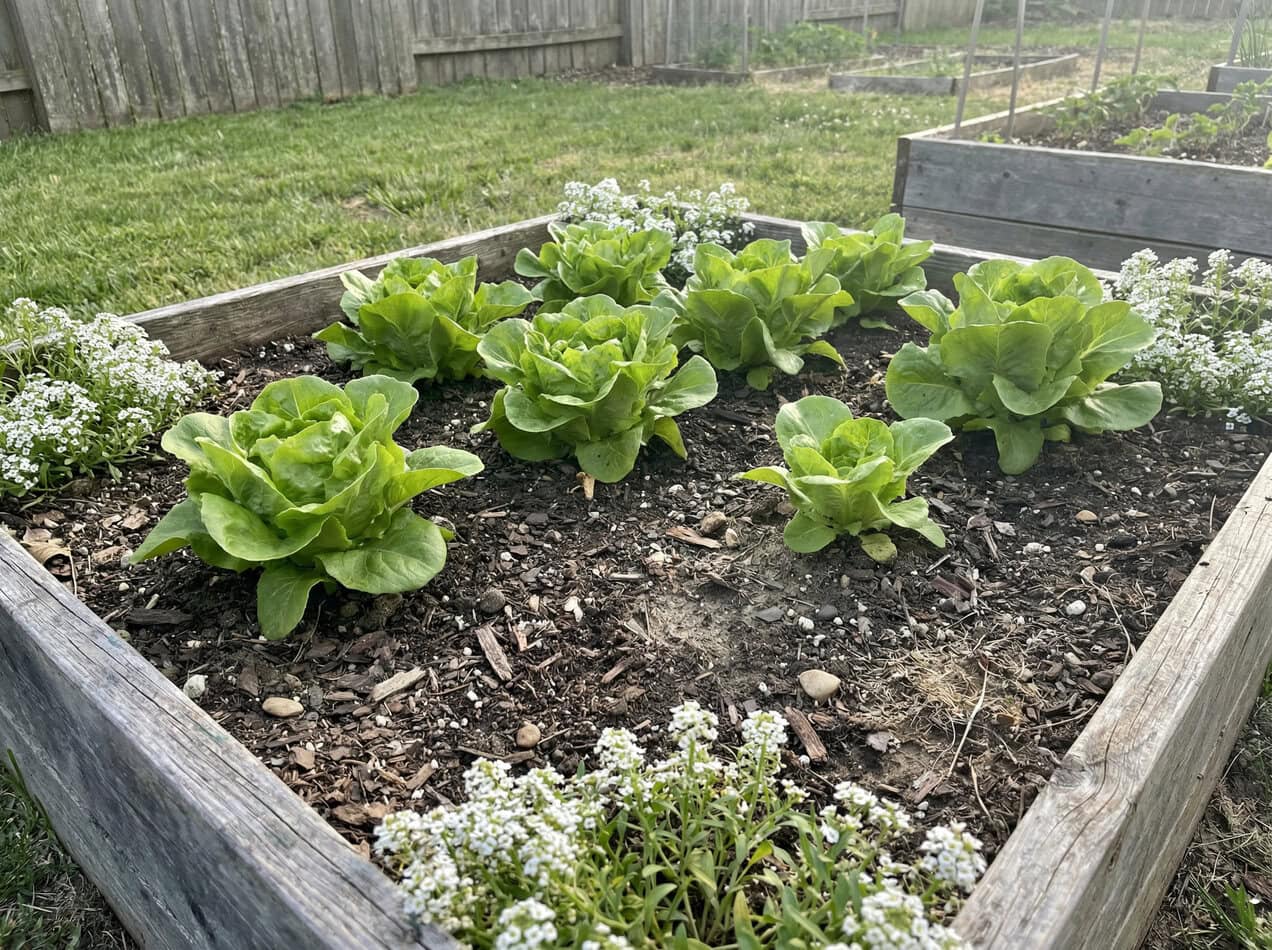
Sweet alyssum is one of those companion plants that quietly does a lot of good work in the garden. I like planting it near lettuce because it attracts beneficial insects while staying low and compact.
When in bloom, sweet alyssum draws in hoverflies and other helpful predators whose larvae feed on aphids, which are a common lettuce pest. It also works as gentle ground cover, helping shade the soil and retain moisture without competing with lettuce roots.
Avoid These Plants Near Lettuce

Brassicas (Like Cabbage Or Broccoli)

Brassicas can crowd lettuce and often attract similar pests, which can increase the risk of infestations in smaller garden spaces. I’ve found it’s best to give these crops their own area so lettuce has room to grow without added pest pressure.
Parsley

Parsley isn’t necessarily harmful to lettuce, but it can compete for nutrients and space once established. In my experience, parsley does better when planted a little distance away or kept in a separate container if you’re growing lettuce nearby.
Conclusion

To be honest, I’ve read my fair share of gardening hack forums and quick-fix articles over the years, just like you probably have. In my experience, those shortcuts rarely deliver lasting results.
Companion planting does take a bit more effort, since you’re growing additional plants alongside your main lettuce crop. But I’ve found that the long-term benefits healthier plants, fewer pest issues, and better overall productivity, make it well worth it.
Thoughtful companion planting is one of the most reliable ways to build a stronger, more balanced garden. And if you have any companion planting tips of your own, feel free to share them below; I’m always curious to learn what’s working in other gardens.

I’m Rita, passionate about flowers, plants and growing my own vegetables at home. I live in an apartment, but I still have my garden, I intend to use all my knowledge to help you also have a lively, happy and productive garden (even in an apartment).